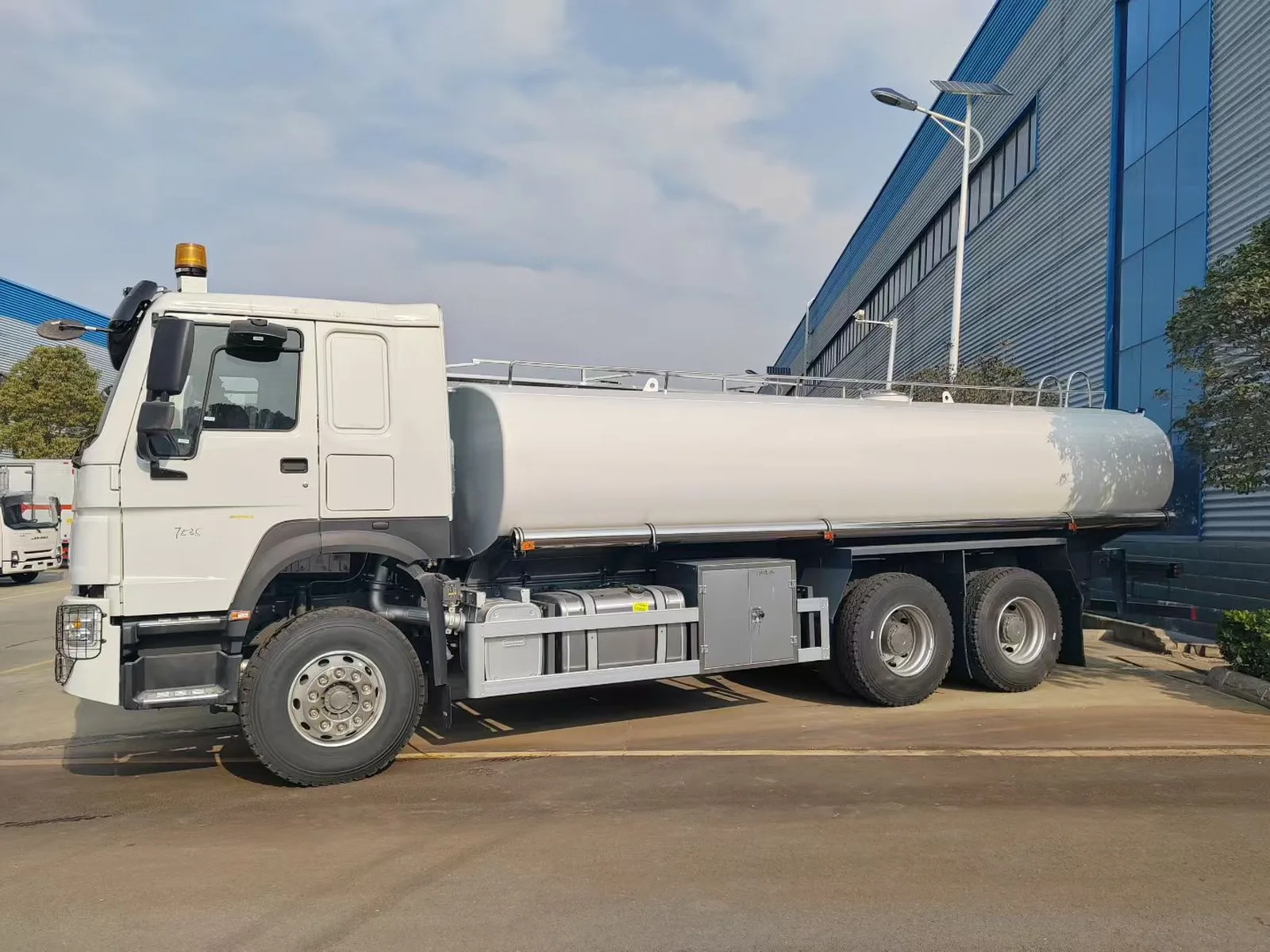
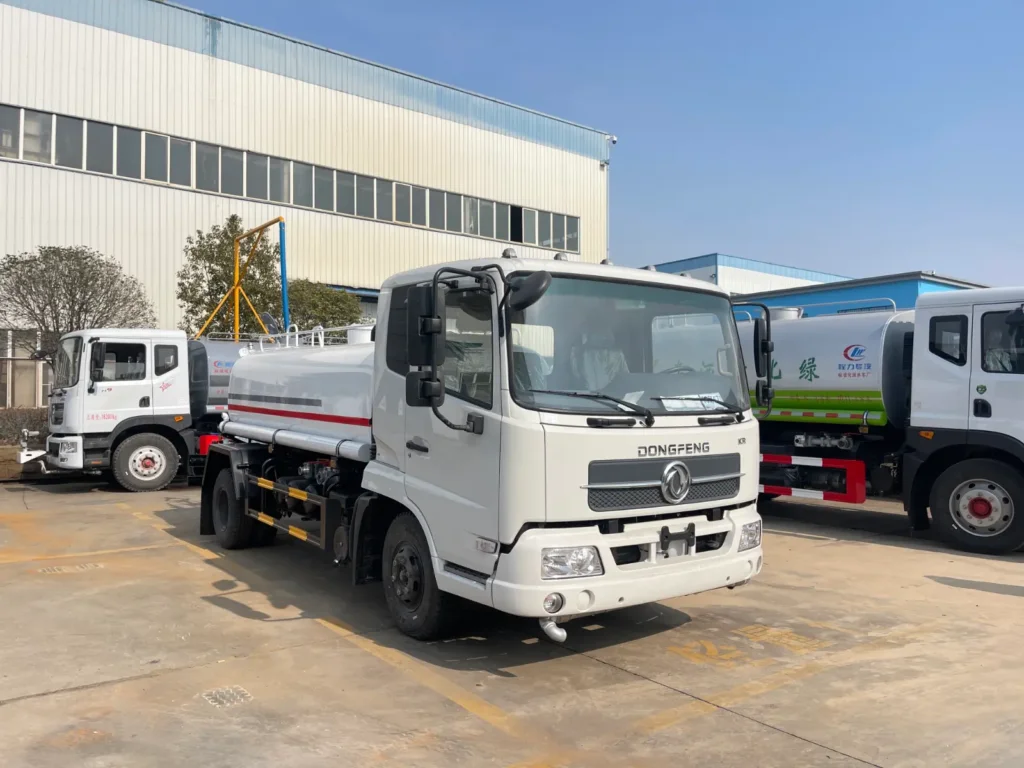
To operate a water sprinkler truck safely, follow four stages: check the driver, vehicle, water source and PTO before work; keep a steady low speed and never run the pump dry during work; drain all water in freezing weather after work; and clean filters, lubricate parts and prevent rust as routine maintenance. This guide explains each step, so your operators can protect people, the pump and the tank, and keep the truck working for years.
Whether you run a small 8 m³ water sprinkler truck for city streets or a 20 m³ water tanker for construction sites, the same rules apply.
Quick checklist: water sprinkler truck precautions
- Before work: trained operator in work clothes and a reflective vest; full vehicle check; suction hose fully under water; engage the PTO only when the truck is stopped.
- During work: steady low speed (about 5–10 km/h in cities); no people getting on or off; warning lights on; never spray people or live electrical equipment; never run the pump dry or against closed valves.
- After work: park safely, switch off; drain the pump, pipes and tank below 0 °C; clean the truck and fill in the work log.
- Daily maintenance: clean filters and tank sediment; lubricate and tighten; check paint and keep ball valves fully open or fully closed.
1. Before operation
Operator and qualifications
Only trained operators should drive and operate the sprinkler truck. During work they must wear work clothes and a reflective vest so other road users can see them. Drink driving and any operation against the rules are strictly forbidden.
Vehicle inspection
Check the whole vehicle before every shift:
- Steering and brakes
- Tyre pressure
- Engine and chassis
- Lights and warning devices
- Air lines: make sure there are no air leaks
Every part should be in good condition before the truck leaves the yard.
Water source and filling
- When drawing water, keep the end of the suction hose fully under water, and keep it away from stones and mud.
- Keep the inlet pipe airtight so the vacuum holds and the seal is reliable.
- A self-priming pump needs priming water the first time it is used.
- A centrifugal pump needs priming water before every suction.
Engaging the PTO
Engage the power take-off (PTO) only when the truck is stopped, before spraying or drawing water. Release the clutch slowly when engaging, to avoid damaging the PTO.
2. During operation
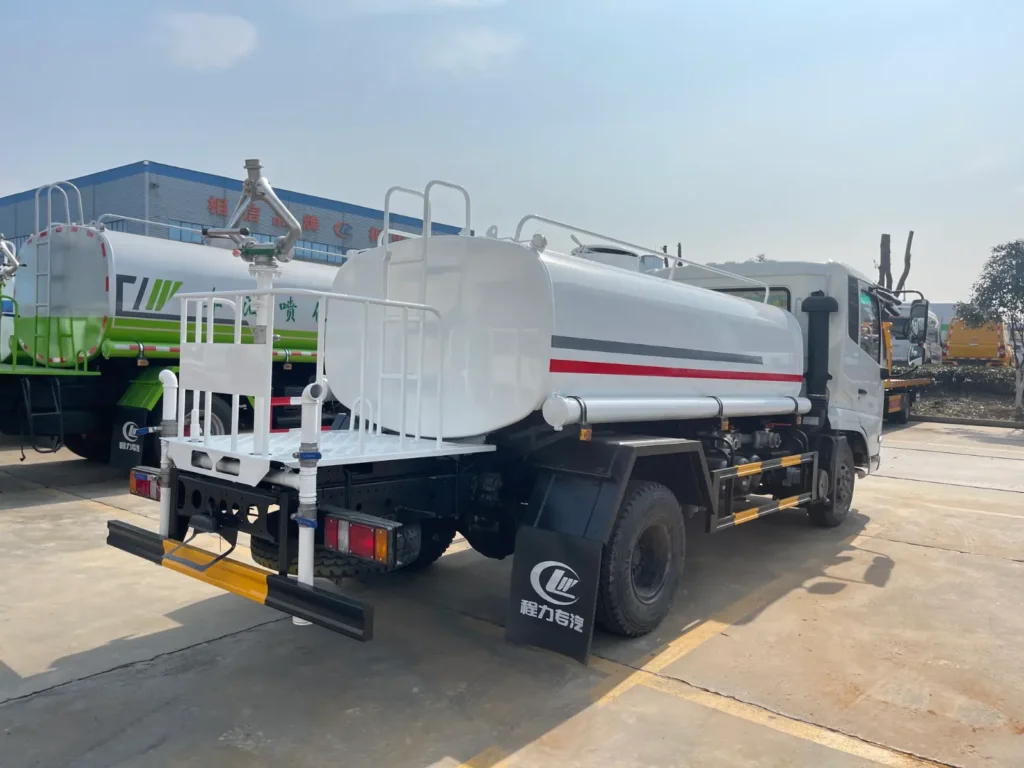
Driving and work safety
- Keep the speed within a reasonable range, for example 5–10 km/h in urban areas, and drive at a steady speed.
- Avoid sudden acceleration and emergency braking.
- Never let people get on or off while the truck is moving, and never carry passengers who are not part of the job.
- Watch blind spots and make sure the work area is safe.
Spraying
- Adjust the spray angle and pressure to suit the road surface.
- Avoid pedestrians, so water does not splash or hurt anyone.
- When using a high-pressure water cannon, never spray at people or live electrical equipment.
- Switch on the warning lights and audible alert during work.
Equipment operation
- Never let the pump run continuously with all outlet valves closed.
- Never let the pump run dry without water: this damages the mechanical seal.
- Avoid frequent gear changes, and never engage the PTO roughly without using the clutch.
Wet and slippery roads
On rain, snow or muddy roads, take care against skidding: slow down and avoid sudden acceleration and emergency braking. A full tank makes the truck heavy, so stopping distances are longer.
3. After operation
Parking and shutting down
When the job is finished, park the truck in a safe place, switch off the engine and electrical system, and lock the doors and windows.
Draining to prevent freezing
In winter, or whenever the temperature is below 0 °C, drain all remaining water from the pump, pipes and tank immediately after work. Water left inside can freeze and crack parts.
Cleaning and records
Wash the truck and pipelines, clean up the work site, and fill in the work and running log.
4. Daily maintenance and care
Regular cleaning
- Clean the filter screens at the pump, pipes and valves regularly to prevent blockages.
- Remove sediment from the bottom of the tank regularly.
Lubrication and tightening
- Lubricate all drive parts and lubrication points regularly.
- Check and tighten the bolts on all connections often, so nothing works loose.
Rust and corrosion protection
- Check the tank paint regularly to stop the tank from rusting.
- Do not leave ball valves half open for long periods: the seal ring can deform.
Summary table
| Stage | Key points |
| Before work | Trained operator with reflective vest; full vehicle check; suction hose fully under water; prime the pump; engage PTO only when stopped |
| During work | Steady low speed (5–10 km/h in cities); no passengers on or off; warning lights on; no spraying at people or live equipment; never run the pump dry or against closed valves |
| After work | Park safely and switch off; drain all water below 0 °C; clean the truck and fill in the log |
| Maintenance | Clean filters and tank sediment; lubricate and tighten; check paint; avoid half-open ball valves |
FAQ
What speed should a water sprinkler truck drive at while spraying?
Keep a reasonable, steady speed: about 5–10 km/h in urban areas. Avoid sudden acceleration and emergency braking.
Can the water pump run with the outlet valves closed?
No. Never let the pump run continuously with all outlet valves closed, and never let it run dry without water. Both can damage the mechanical seal.
Does the pump need priming water?
A self-priming pump needs priming water the first time it is used. A centrifugal pump needs priming water before every suction.
When should the PTO be engaged?
Only when the truck is stopped. Release the clutch slowly when you engage it, to avoid damaging the PTO.
How do I protect a water truck in freezing weather?
When the temperature is below 0 °C, drain all water from the pump, pipes and tank immediately after work, so nothing freezes and cracks.
Why should ball valves not stay half open?
A ball valve left half open for a long time can deform its seal ring and start to leak. Keep it fully open or fully closed.
Choose the right water sprinkler truck
Senway Truck builds water sprinkler trucks, water tankers and dust suppression trucks from 8 m³ to 25 m³, in left-hand or right-hand drive. Popular models:
- Dongfeng 8 m³ water sprinkler truck for city streets
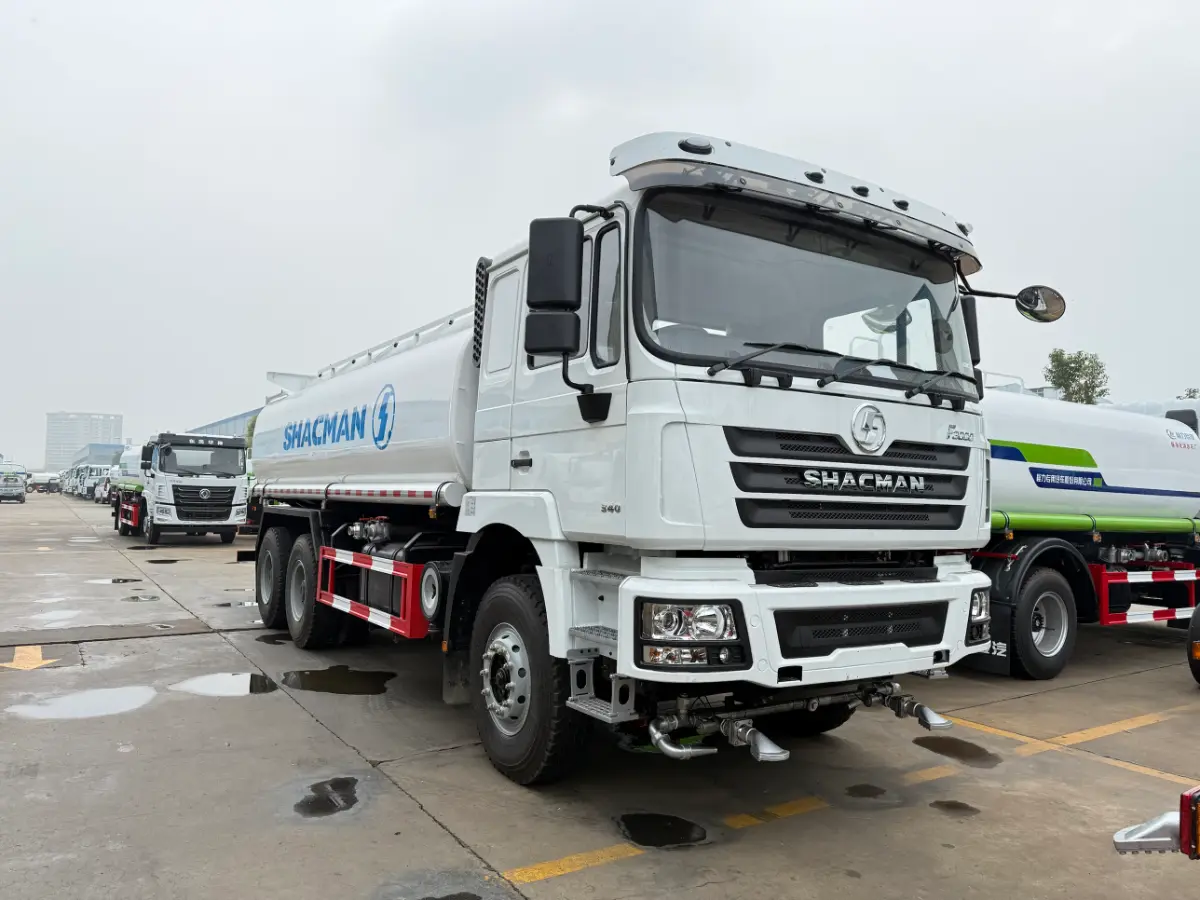
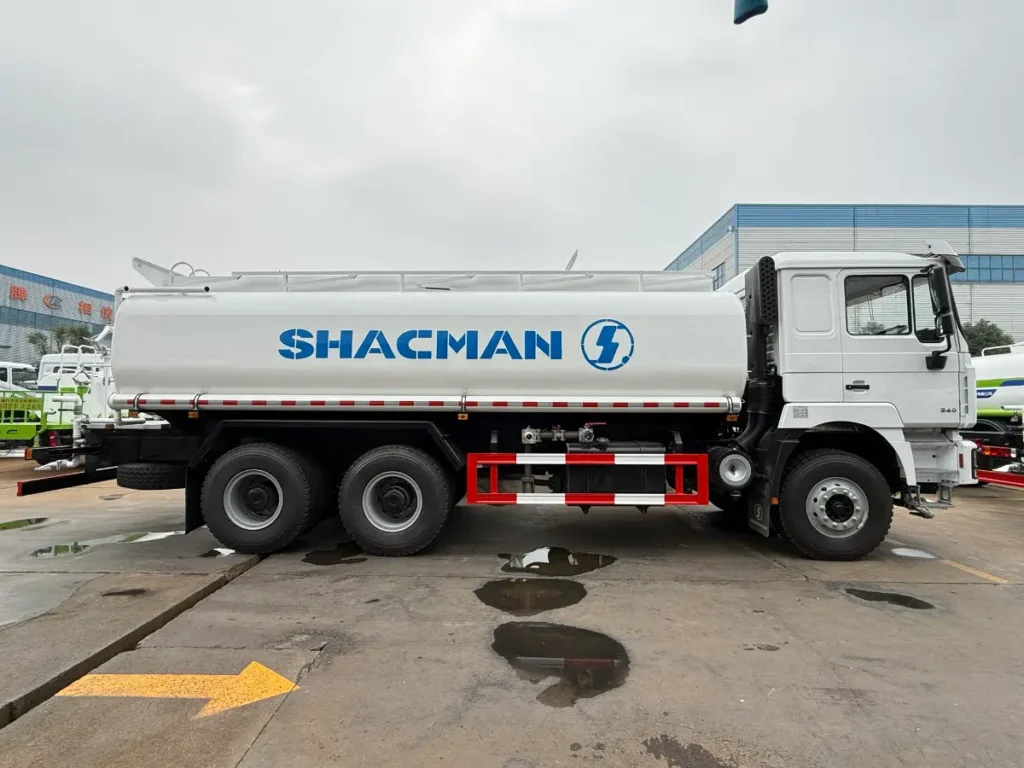
- SHACMAN 20 m³ water sprinkler truck for roads and construction sites
- SHACMAN 25 m³ water sprinkler truck for large projects
- SHACMAN 12 m³ dust suppression truck with a fog cannon for mines and demolition sites
Browse all water sprinkler trucks, or contact us for a quotation within 48 hours.