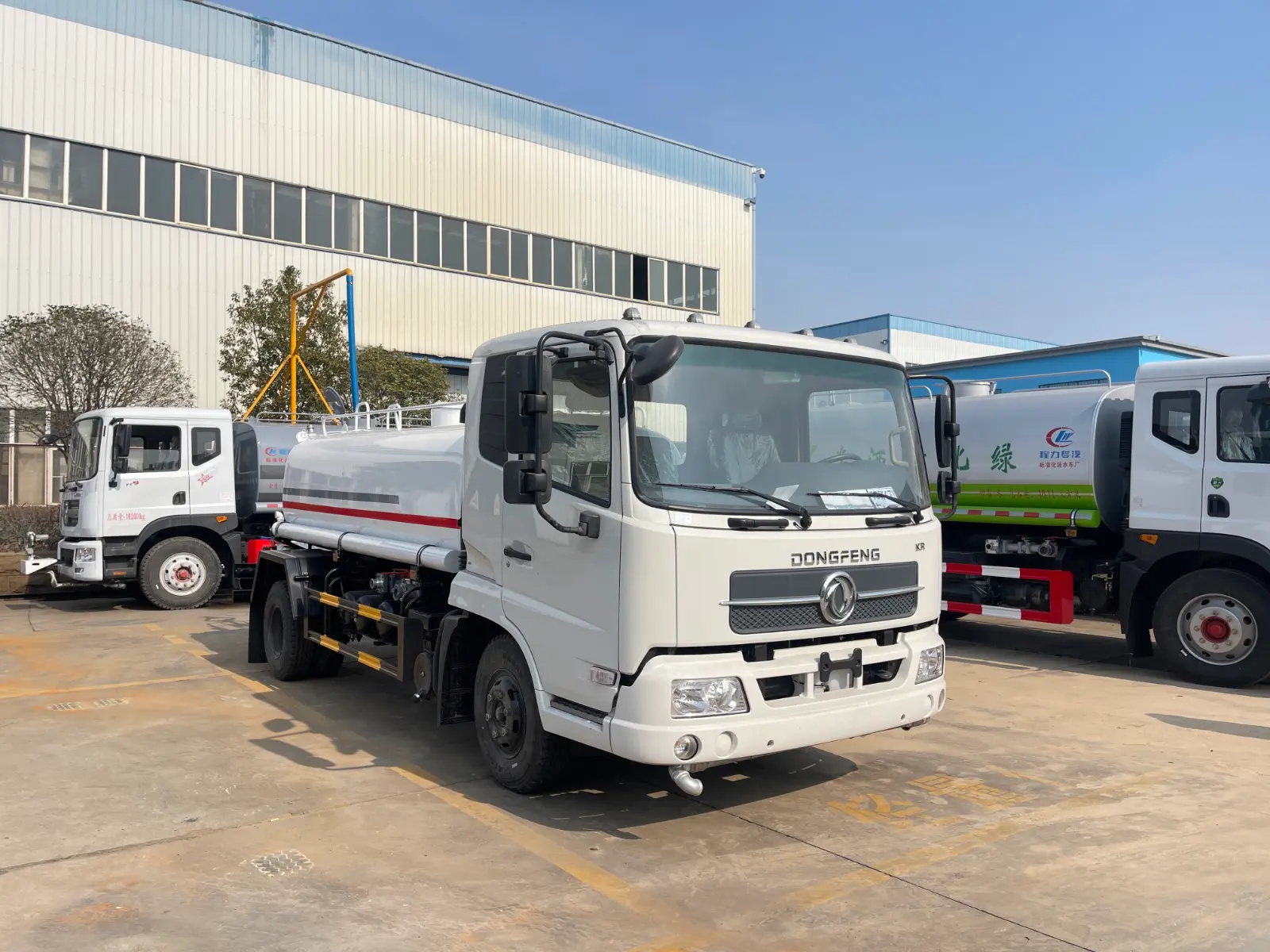
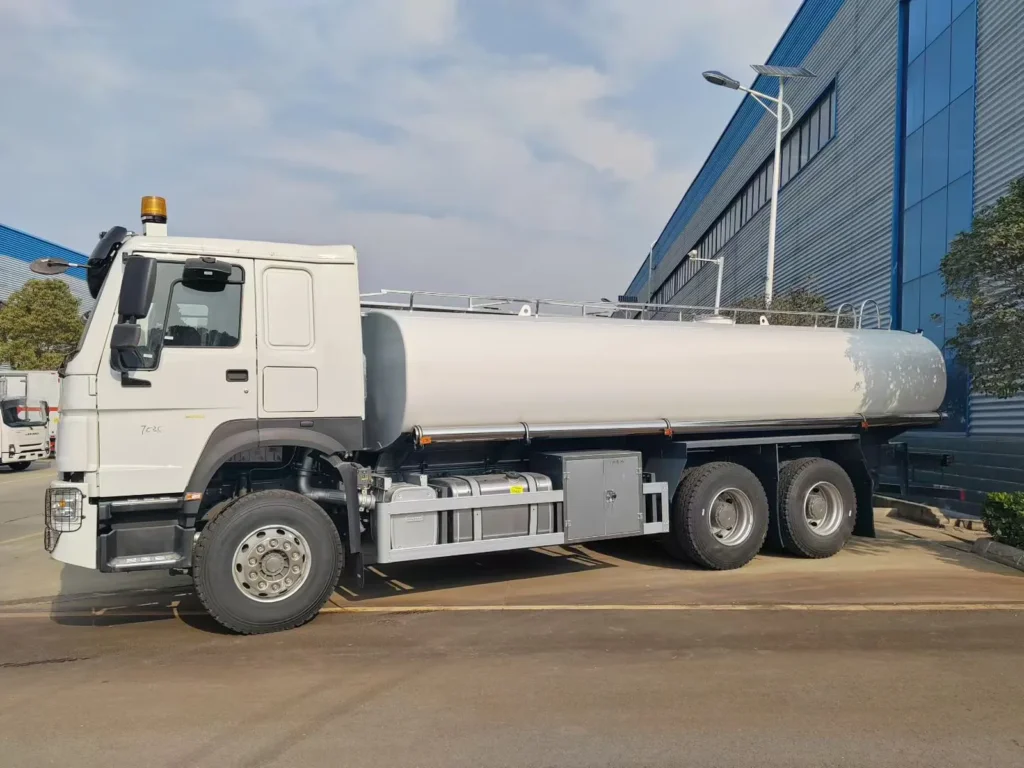
A drinking water tanker truck carries clean water from a treated or tested source to people who have no piped supply. For towns, villages, schools, clinics and work camps in regions where water networks have not yet arrived, a food-grade stainless steel tanker is often the fastest and most practical way to deliver safe water every day.
According to WHO and UNICEF, about 1 in 4 people in the world, roughly 2.1 billion, still did not have safely managed drinking water in 2024. Many of them live in rural areas and fast-growing towns where building pipelines will take years. Water trucks fill that gap today.
Why a dedicated drinking water truck, not an ordinary water tanker?
A standard water sprinkler or construction water truck usually has a carbon steel tank with paint or coating inside. That is fine for dust control, but not for water people drink. Rust, peeling coating and residues can contaminate the load. A drinking water tanker is built differently:
- Food-grade stainless steel tank: SUS304-2B stainless steel has no inner paint to peel and resists corrosion in hot, humid climates.
- Pickled and passivated interior: the inside surface is chemically cleaned and passivated, so it stays smooth and easy to sanitise.
- Stainless pump, valves and piping: every part the water touches is stainless steel, not cast iron or galvanised pipe.
- Manholes for cleaning: large DN500 manholes let operators inspect, wash and disinfect the tank between loads.
Who uses drinking water tanker trucks?
- Municipal water utilities serving districts not yet connected to the network, or areas hit by pipe bursts and outages.
- Rural water programmes run by local governments and development partners, delivering to village storage tanks and cisterns.
- Emergency and drought relief teams that need to move large volumes of safe water quickly after floods, droughts or other disasters.
- Schools, health centres and refugee or work camps that need a reliable daily supply.
- Mines, oil and gas sites and construction projects in remote areas, where workers need potable water on site.
- Private water vendors who sell water to households, hotels and businesses.
What to look for when choosing a drinking water tanker
1. Tank material and thickness
Ask for the exact stainless grade and plate thickness. SUS304-2B food-grade stainless steel at around 3.75 mm is a common, durable choice for a 20,000 litre tank on a 6×4 chassis.
2. Anti-surge baffles
Water moves inside the tank when the truck brakes or turns. Corrugated baffle plates reduce surge, making the truck safer to drive on rough rural roads and helping keep the tank structure stable.
3. Pump and delivery system
A PTO-driven, self-priming stainless steel pump lets one truck both fill itself from a well, river intake or reservoir and deliver water into elevated tanks, jerrycans or cisterns. Clamp-type stainless butterfly valves are easy to dismantle and clean.
4. A chassis that suits local roads and service
In many developing markets, a proven diesel chassis with simple mechanics is easier to keep running than a complex modern one. Features such as an oil-bath air filter for dusty roads, a high-mounted bumper for rough tracks and drum brakes that local workshops know well make a real difference.
5. Capacity
Larger tanks mean fewer trips. A 20,000 litre (20 m³) tanker on a 6×4 chassis is a common size for town and district supply. If one 20 m³ load gives each person about 20 litres a day for basic drinking, cooking and hygiene, a single trip can serve roughly 1,000 people for a day.
Keeping the water safe: good operating practice
- Use the tanker only for drinking water. Never load fuel, chemicals or untreated wastewater.
- Fill from a tested or treated source and follow the local water authority’s guidance on chlorination.
- Clean and disinfect the tank, pump, hoses and valves regularly, and always after the truck has been out of service.
- Keep hoses in their closed stainless tubes and cap hose ends so they do not touch the ground.
- Keep simple records of each filling source, date and cleaning, so problems can be traced quickly.
For more on daily pump and tank care, see our guide to water truck operating precautions.

Our HOWO 20,000 L drinking water tanker
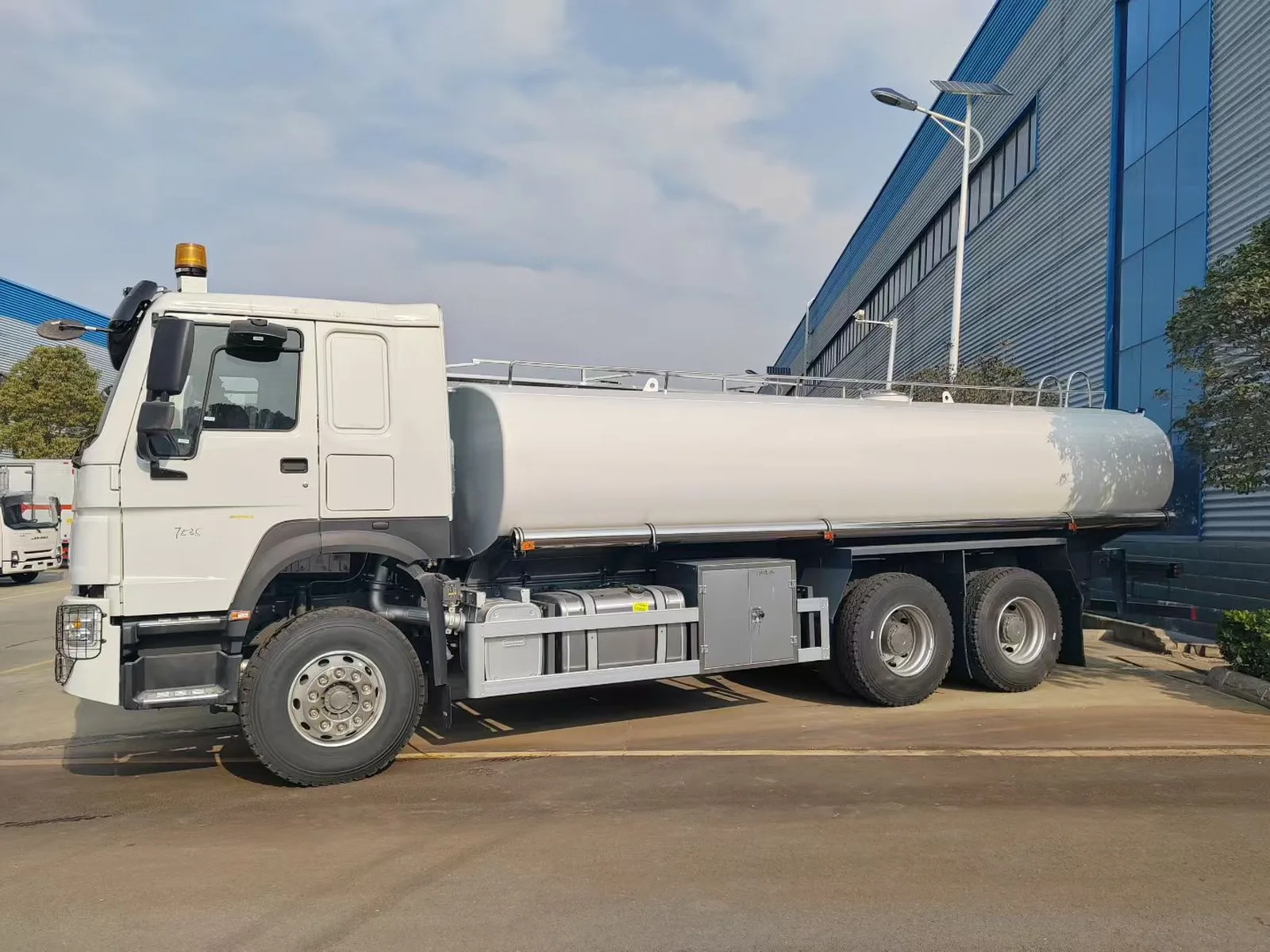
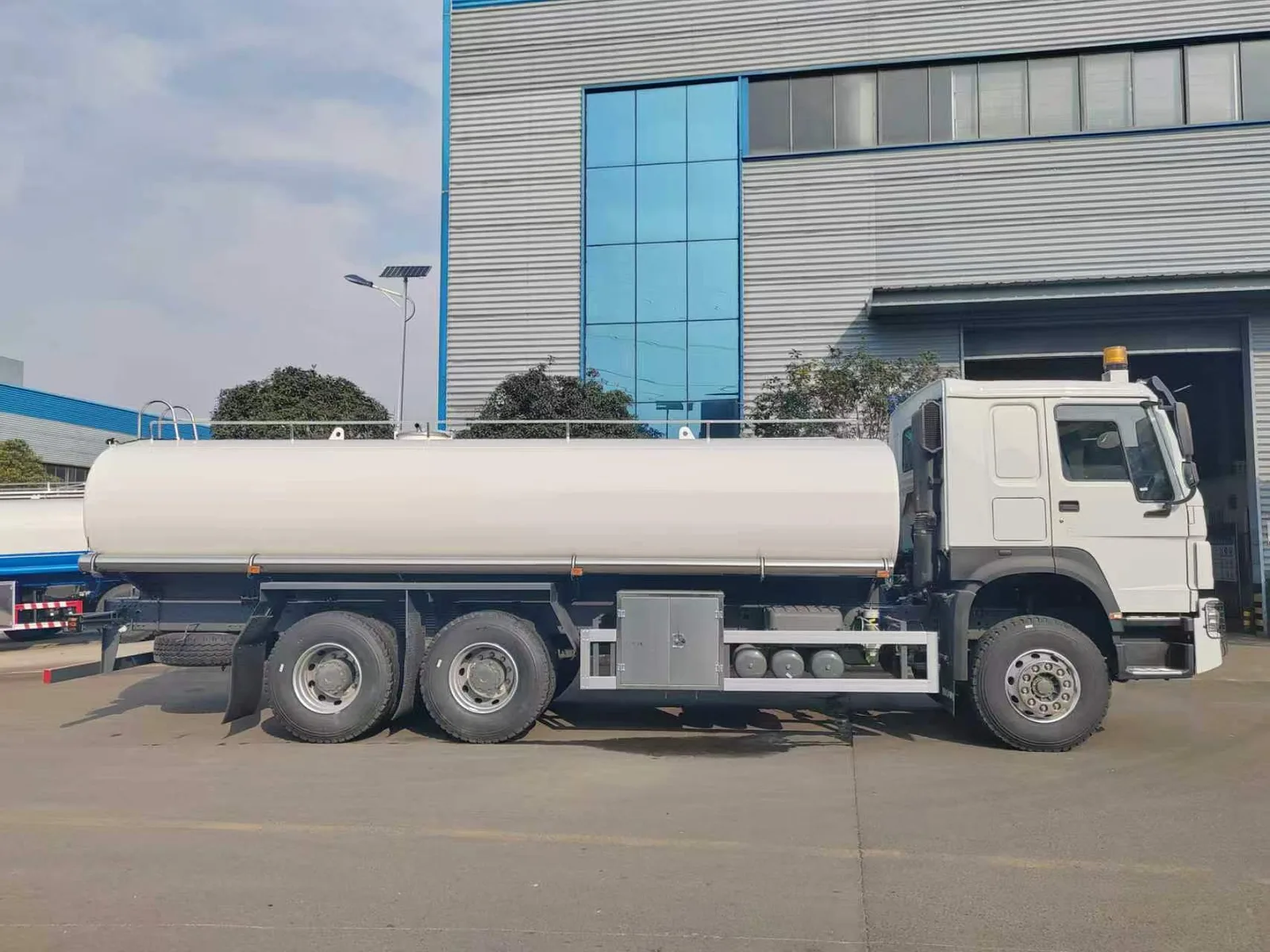
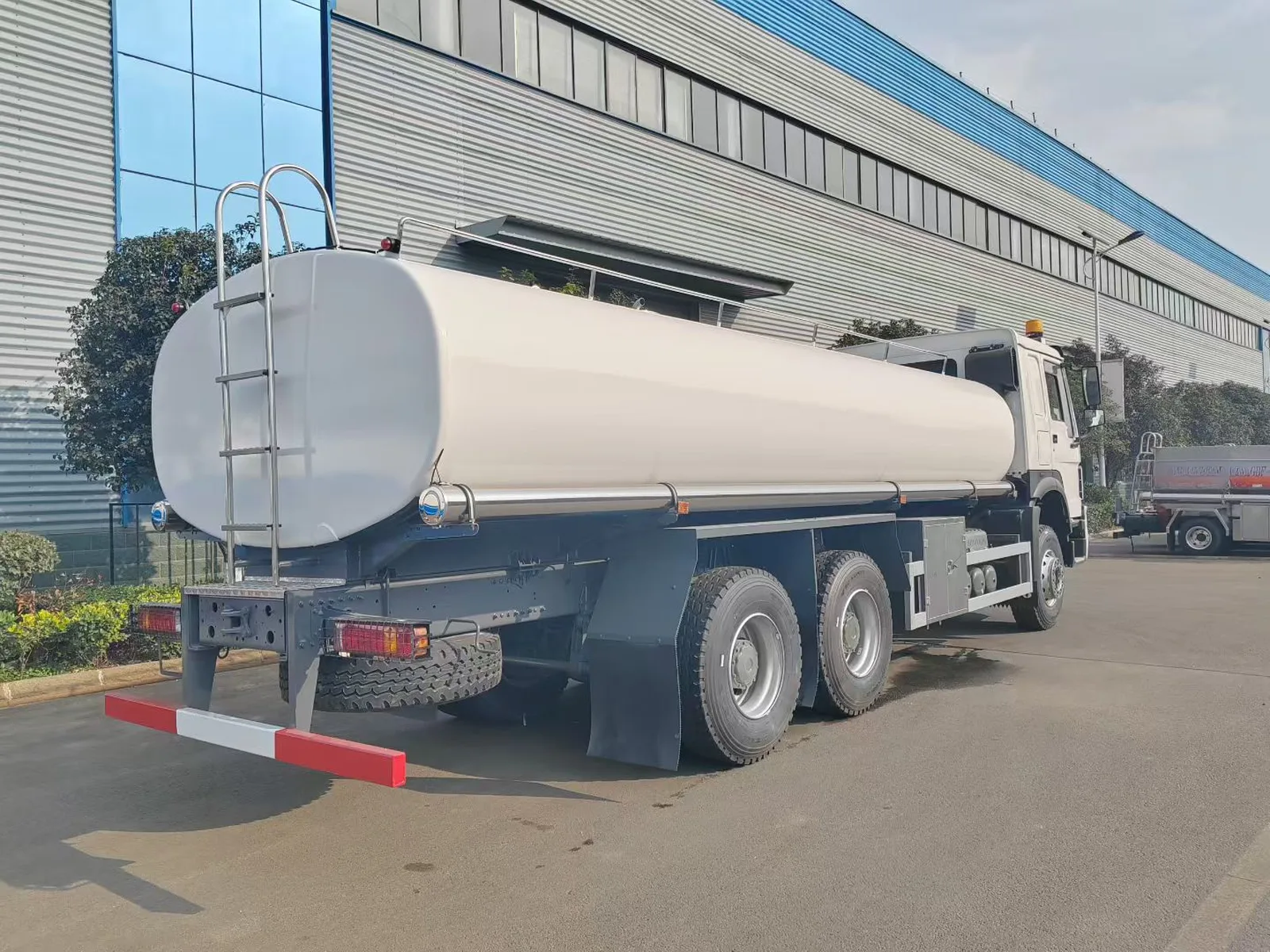
The HOWO 6×4 20000L drinking water tanker truck from Senway Truck combines the points above:
- 20 m³ single-compartment tank in SUS304-2B food-grade stainless steel, 3.75 mm, pickled and passivated inside, mirror-polished outside
- 3 corrugated anti-surge baffles, argon arc welded
- 60/90 SUS304 stainless self-priming pump driven by the PTO, stainless pump box with inlet strainer
- SUS304 DN63 clamp-type butterfly valves and stainless piping
- 2 DN500 manholes, top railing, rear ladder and 2 × 3.5 m suction hoses
- Sinotruk HOWO 6×4 chassis, WD615 371 hp diesel, HW19710 10-speed gearbox; left- or right-hand drive and emission standard to suit your market
Tank capacity, chassis and equipment can be adapted to your water programme. Tell us your water source, the roads you drive on and how many people you need to serve, and we will recommend a suitable configuration.
See the full specifications on the HOWO 20000L drinking water tanker truck page, or browse our water tanker trucks.